We invented calculus, satellites, and the machine gun — and we have still lost, repeatedly and on the record, to birds, hippos, and one write-in rhinoceros. Fourteen documented cases of the animal kingdom winning.
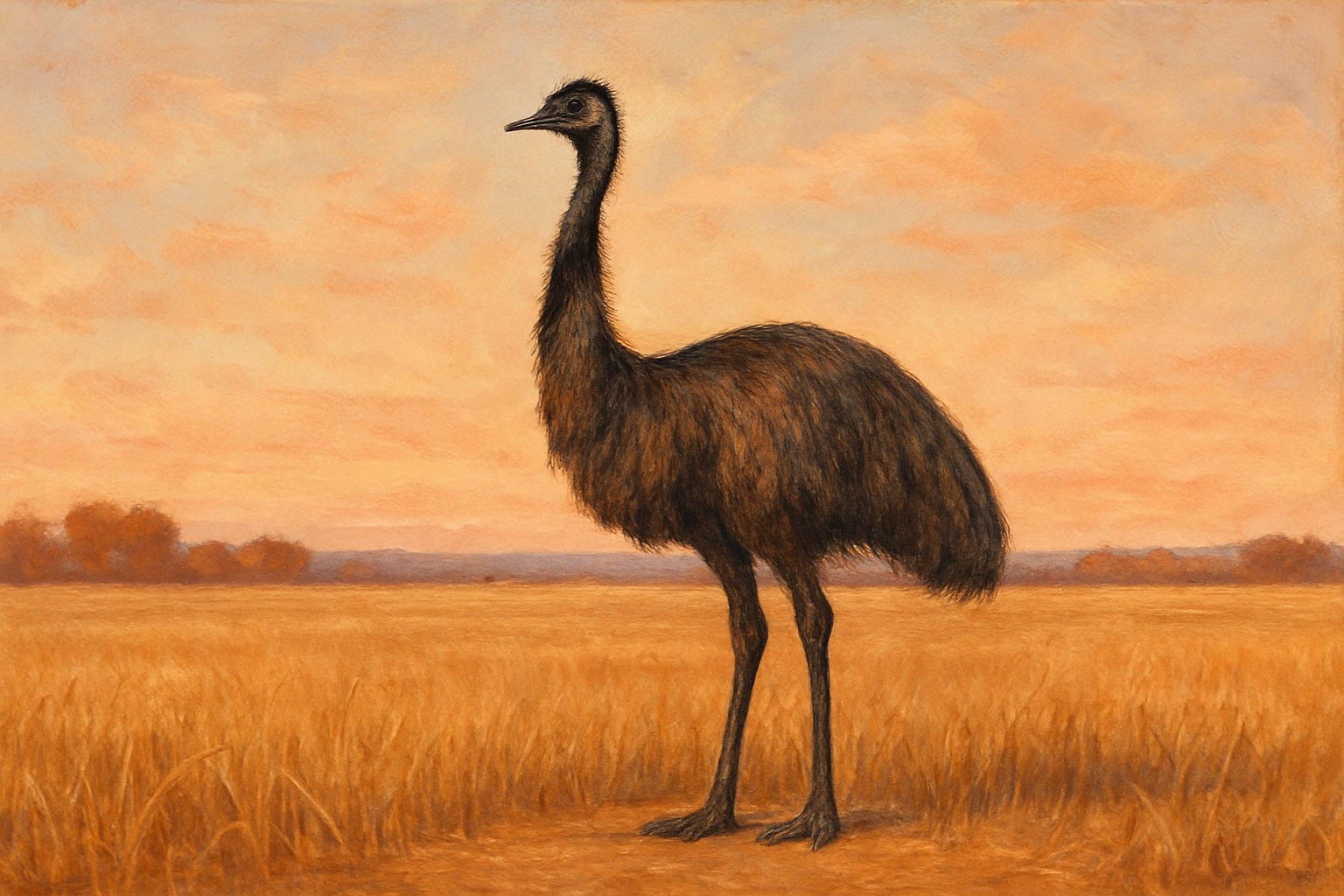
In 1932, Australia deployed soldiers with Lewis machine guns against about 20,000 crop-destroying emus in Western Australia. After weeks of chasing, thousands of rounds, and modest results, the military withdrew.
Major Meredith marveled that the emus could “face machine guns with the invulnerability of tanks.” The Emu War remains history's clearest military defeat by flightless birds.
The Tower of London keeps at least six ravens at all times because legend says the kingdom will fall if they leave — a full-time Ravenmaster tends them and their flight feathers are trimmed to discourage departures.
Historians note the “ancient” Charles II decree may actually be a Victorian-era invention — but the British government isn't taking chances either way. The birds have a better job security story than most humans.
Of the original 54 Dickin Medals — the animal Victoria Cross instituted in 1943 — 32 went to pigeons, more than dogs, horses, and cats combined.
Birds like G.I. Joe carried messages that saved entire units when radios failed. The most decorated animal of WWII was, by an overwhelming margin, the pigeon.
Pablo Escobar illegally imported four hippos to his Colombian estate in the 1980s. After his death they escaped, thrived in the Magdalena River basin, and now number well over a hundred — the largest wild hippo population outside Africa.
Colombia has tried sterilization, relocation, and legal action; in 2021 a US federal court even recognized the hippos as “interested persons” in a procedural ruling. The hippos, so far, are winning.
In 1958, voters in São Paulo, Brazil, wrote in Cacareco — a rhinoceros at the local zoo — for city council, and she drew around 100,000 votes, outpolling every political party.
The protest vote was so famous that “voto Cacareco” became Brazilian shorthand for a ballot cast in disgust. The rhino was not seated.
In 1938, the mayor of Milton, Washington quietly put “Boston Curtis” on the ballot for Republican precinct committeeman. Boston Curtis was a mule. He won, 51 votes to zero.
The mayor's stated point: voters will elect anyone whose name is on the ballot without checking. The mule proved it flawlessly.
Carrion crows in Sendai, Japan learned to drop walnuts in front of cars at intersections, wait for the light, then stroll out on the crosswalk to collect the cracked nuts.
They use our traffic, our tires, and our pedestrian signals — turning the entire city into a nutcracker they don't have to maintain.
In 2009, a South African IT company raced a carrier pigeon named Winston, carrying a 4GB memory card, against the national telecom's ADSL line over a 60-mile transfer.
Winston delivered the data in about two hours, by which point the broadband upload had reached roughly 4%. The pigeon beat the internet, on camera.
Long-tailed macaques at Bali's Uluwatu temple systematically steal glasses, phones, and hats from tourists — then hold the items hostage until temple staff or victims pay ransom in food.
Researchers documented that the monkeys preferentially target high-value items and hold out for better payment — a learned, cultural economy of robbery and barter, run at scale on tourists.
China's 1958 “Four Pests” campaign mobilized millions of people to exterminate sparrows, which ate grain. It worked — and then insect populations the sparrows had been eating exploded, devastating harvests.
The ecological backfire contributed to catastrophic famine, sparrows were removed from the pest list, and China ended up importing sparrows from the Soviet Union. The birds won by dying.
In 1935, Australia imported 102 cane toads to eat the beetles destroying sugar cane. The toads largely ignored the beetles — which live high on the cane stalks the toads can't reach — and started eating everything else.
There are now estimated hundreds of millions of them marching across the continent, poisonous to most predators. The pest-control project became the pest.
In 1859, an American farmer on San Juan Island shot a British-owned pig rooting in his potatoes — and the dispute escalated into a military standoff between the US and Britain, complete with warships, that lasted over a decade.
The Pig War's only casualty was the pig. The border dispute was finally settled by arbitration in 1872 — by the German Kaiser.
When Australian researchers fitted magpies with tiny GPS tracking harnesses in 2022, the birds immediately began helping each other peck the trackers off — every unit was removed within days.
The study collapsed, but accidentally documented something rarer: coordinated “rescue” behavior, with unencumbered magpies freeing their trapped friends. The birds peer-reviewed the experiment and rejected it.
In 2016, an octopus named Inky escaped New Zealand's National Aquarium by slipping through a gap in his tank lid, crossing the floor, and squeezing down a 50-meter drainpipe that emptied into the sea.
Staff found the suction-cup trail in the morning. Inky had assessed the security, found the one exit, and used it — overnight, unsupervised, and permanently.
Deep respect to Inky's prison break, but the emus hold the title: they are the only entrants on this list with a confirmed victory over an actual army.