Borders look crisp and authoritative on a map. Zoom in, and you find towns chopped into confetti, clocks set by politics instead of the sun, and at least one country that decided a Friday simply would not happen. Here are fourteen places where the lines went sideways.
The Belgian town of Baarle-Hertog exists as 22 separate fragments scattered inside the Netherlands — and the Dutch town of Baarle-Nassau has counter-enclaves sitting inside those Belgian fragments.
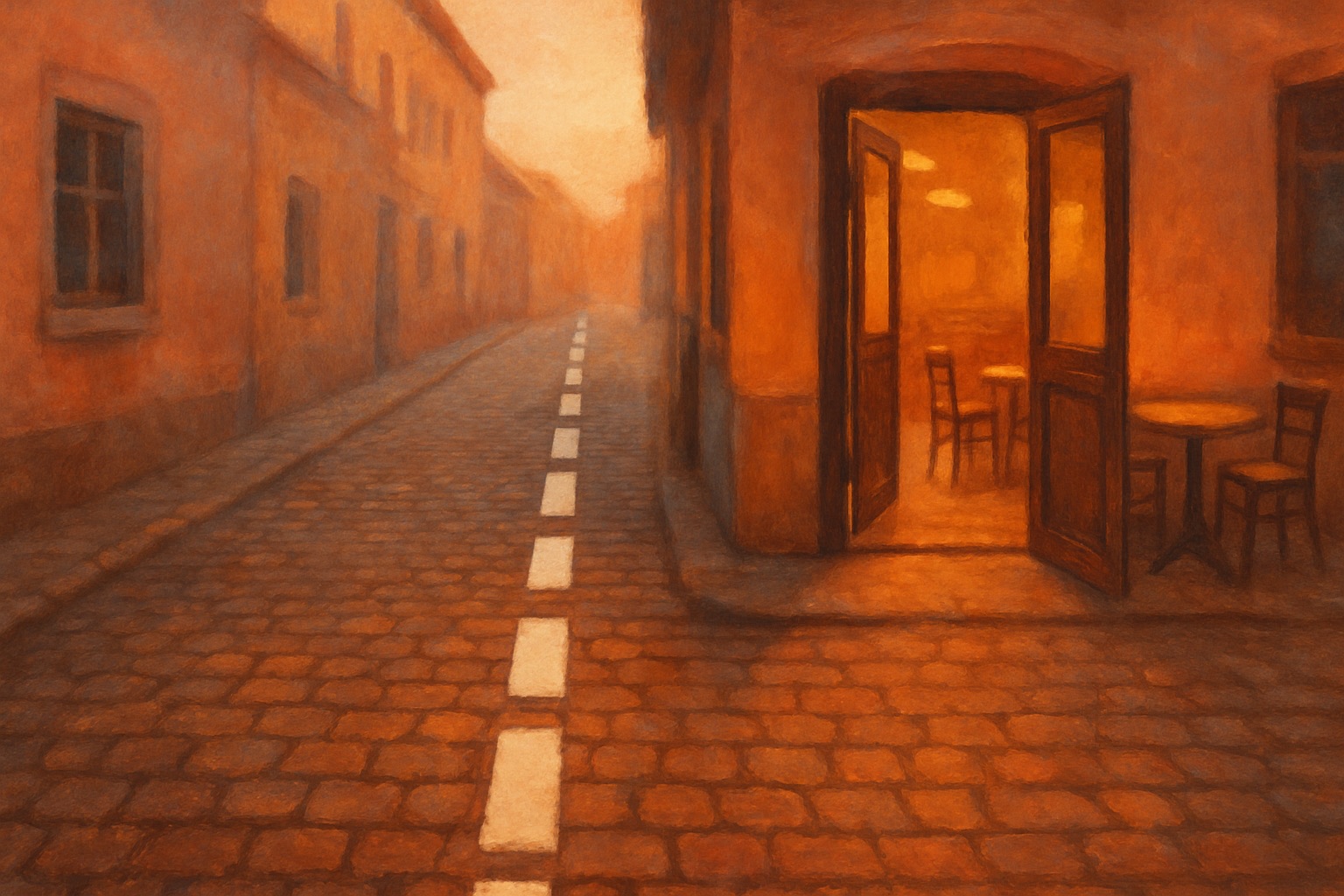
The border runs straight through houses, shops, and cafés, so the local rule is that your front door decides your country. Some buildings straddle the line and carry a house number in each nation.
The Haskell Free Library and Opera House was deliberately built in 1904 to straddle the US–Canada border between Derby Line, Vermont and Stanstead, Quebec, with a black line running across the floor.
The opera stage sits in Canada while most of the seats are in the United States — meaning audiences have spent a century watching international performances without a passport.
Big Diomede (Russia) and Little Diomede (USA) sit just 2.4 miles apart in the Bering Strait, but the International Date Line runs between them, putting them roughly 21 hours apart.
Locals call them Tomorrow Island and Yesterday Isle. Stand on the American one and you are looking across open water at Russia — tomorrow.
In 1995, Kiribati redrew the International Date Line around its eastern islands, creating the giant eastward bulge you see on modern maps and putting part of the country at UTC+14 — the earliest time zone on Earth.
The move ended the absurdity of one country living in two different days, and conveniently made Kiribati the first nation to greet the year 2000. It even renamed Caroline Island as Millennium Island for the occasion.
Samoa deleted Friday, December 30, 2011 from its calendar entirely, jumping across the International Date Line overnight to align its work week with Australia and New Zealand.
Residents went to bed on Thursday the 29th and woke up on Saturday the 31st. For anyone born on December 30, the country simply skipped their birthday.
China spans roughly five natural time zones but runs the entire country on Beijing time, UTC+8.
In far-western Xinjiang, that means summer sunsets around midnight and solar noon in mid-afternoon — so many locals quietly keep an unofficial second clock set two hours earlier, and every meeting invite has to specify which time it means.
Nepal runs on UTC+5:45 — one of the world's only 45-minute time zone offsets, shared officially with New Zealand's Chatham Islands and unofficially with a tiny sliver of Australia around Eucla.
The offset keeps Nepal's clocks pinned to a meridian on its own territory rather than adopting India's UTC+5:30 — a fifteen-minute declaration of independence.
Spain sits geographically in line with the UK and Portugal, but has run on Central European Time since 1940, when Franco moved the clocks to match Germany.
The wartime change was never undone. It is one reason Spanish schedules run famously late: by the sun, a 9 pm dinner in Madrid is really more like 7:30.
Crossing the short border between Afghanistan (UTC+4:30) and China (UTC+8) requires moving your watch three and a half hours — one of the largest time jumps at any single land border on Earth.
Walk a few feet, lose most of an afternoon. No jet lag has ever been earned faster.
Point Roberts, Washington exists because the 1846 treaty drawing the US–Canada border along the 49th parallel sliced off the tip of a Canadian peninsula, leaving five square miles of America reachable by land only through Canada.
Older kids there commute to high school in mainland Washington via two international border crossings each way — four passport checks a day to get to class and back.
On the tiny island of Märket, Finland accidentally built its 1885 lighthouse on the Swedish side of the line, so in 1985 the two countries redrew the border into an S-shaped zigzag.
The kink hands the lighthouse to Finland while swapping equal patches of rock to Sweden, so neither country gained an inch — on an island smaller than a city block.
The summit of Mount Everest sits on the border between Nepal (UTC+5:45) and China (UTC+8), making the top of the world two hours and fifteen minutes wide.
Climbers on opposite sides of the same mountain are timing their summit pushes on clocks set hours apart.
Arizona doesn't observe daylight saving time — but the Navajo Nation inside Arizona does, while the Hopi Reservation, which sits entirely inside the Navajo Nation, does not.
In summer you can drive a single highway through northeastern Arizona and change times repeatedly without ever leaving the state. Locals call it the doughnut.
Büsingen is a German town completely surrounded by Switzerland — inside Germany politically, but inside the Swiss customs area economically, with most daily business done in Swiss francs. Italy has its own version, Campione d'Italia, an exclave on the shores of Lake Lugano.
Büsingen has two postal codes — one German, one Swiss — because even the mail can't decide which country it's in.
Respect to Baarle's front-door rule, but Samoa wins this one: any country confident enough to cancel a Friday deserves the last word on time itself.